



How Often Should Lifting Equipment Be Thoroughly Examined?
Lifting equipment plays a critical role across construction, agriculture, warehousing, and industrial environments. However, if lifting operations are not properly managed, equipment failure can lead to serious injuries, fatalities, and costly downtime.
Under the Lifting Operations and Lifting Equipment Regulations 1998 (LOLER), employers and duty holders have legal responsibilities to ensure lifting equipment is properly inspected and maintained. One of the key requirements is the thorough examination of lifting equipment by a competent person.
But how often should these examinations take place?
In this article, we explain the inspection intervals required under LOLER, what equipment is covered, and why proper examination and reporting are essential for workplace safety and compliance.

Who is a ‘competent person’?
A competent person must have:
- sufficient technical knowledge
- practical experience
- understanding of lifting equipment
- the ability to identify defects and assess their importance
Although the competent person may often be employed by another organisation, this is not necessary, provided they are sufficiently independent and impartial to ensure that in-house examinations are made without fear or favour. However, this should not be the same person who undertakes routine maintenance of the equipment – as they would then be responsible for assessing their own maintenance work.
This is why specialist training and industry experience are so important.
What Is a Thorough Examination?
A thorough examination is a detailed inspection of lifting equipment and lifting accessories carried out by a competent person.
The purpose is to:
- identify defects or deterioration
- confirm equipment remains safe to use
- ensure continued compliance with LOLER
- reduce the risk of equipment failure during lifting operations
A thorough examination is more detailed than a routine pre-use check or maintenance inspection and must be properly documented.
What Equipment Is Covered Under LOLER?
LOLER applies to lifting equipment used at work, including:
- cranes
- excavators used for lifting
- telehandlers
- forklift trucks used for lifting operations
- MEWPs
- lifting beams
- chains
- slings
- hooks
- shackles
- lifting accessories
Any equipment used for lifting or lowering loads may fall under LOLER requirements.
How Often Should Lifting Equipment Be Thoroughly Examined?
The frequency of thorough examinations depends on the type of equipment and how it is used.
Every 6 Months
A thorough examination is normally required every 6 months for:
- lifting accessories
- equipment used for lifting people
- lifting equipment exposed to conditions causing deterioration
Examples include:
- chains and slings
- man baskets
- MEWPs used to lift people
Every 12 Months
Most other lifting equipment must be thoroughly examined every 12 months.
Examples may include:
- telehandlers used for lifting loads
- excavators used in lifting operations
- lifting beams
- forklift attachments
Additional Examinations May Be Required
LOLER also requires lifting equipment to be thoroughly examined:
- after substantial alteration or repair
- following exceptional circumstances
- after damage or overload incidents
- after long periods out of use
- if equipment has been involved in an accident
These additional examinations help ensure equipment remains safe before returning to service.
Why Thorough Examinations Matter
Failing to carry out thorough examinations can result in:
- serious injuries
- equipment failure
- enforcement action
- prosecution
- invalid insurance
- project delays
More importantly, regular examination helps identify wear, damage, and deterioration before failures occur.
Common issues identified during examinations include:
- damaged lifting accessories
- hydraulic leaks
- structural cracking
- excessive wear
- missing safety devices
- illegible identification markings
Thorough Examinations vs Pre-Use Checks
Operators should still carry out daily or pre-use checks before using equipment.
However, these checks do not replace the legal requirement for a thorough examination.
Pre-use checks focus on:
- visible defects
- leaks
- tyres or tracks
- controls and warning systems
Thorough examinations involve:
- detailed inspection
- assessment of wear and deterioration
- examination records and reporting
- compliance with LOLER standards
Both are essential parts of safe lifting operations.
Keeping Examination Records
LOLER requires records of thorough examinations to be retained.
These reports should include:
- details of the equipment examined
- defects identified
- repairs required
- examination date
- next examination due date
- competent person details
Good record keeping helps demonstrate compliance and supports effective safety management.
The Importance of Training
Understanding LOLER responsibilities is essential for employers, supervisors, and those involved in lifting operations.
Training helps individuals:
- understand legal duties
- identify defects
- complete examination reports correctly
- improve workplace safety standards
Kentra Training offers the NPORS N019 – Report of Thorough Examination course for those involved in lifting equipment examination and reporting.
Frequently Asked Questions
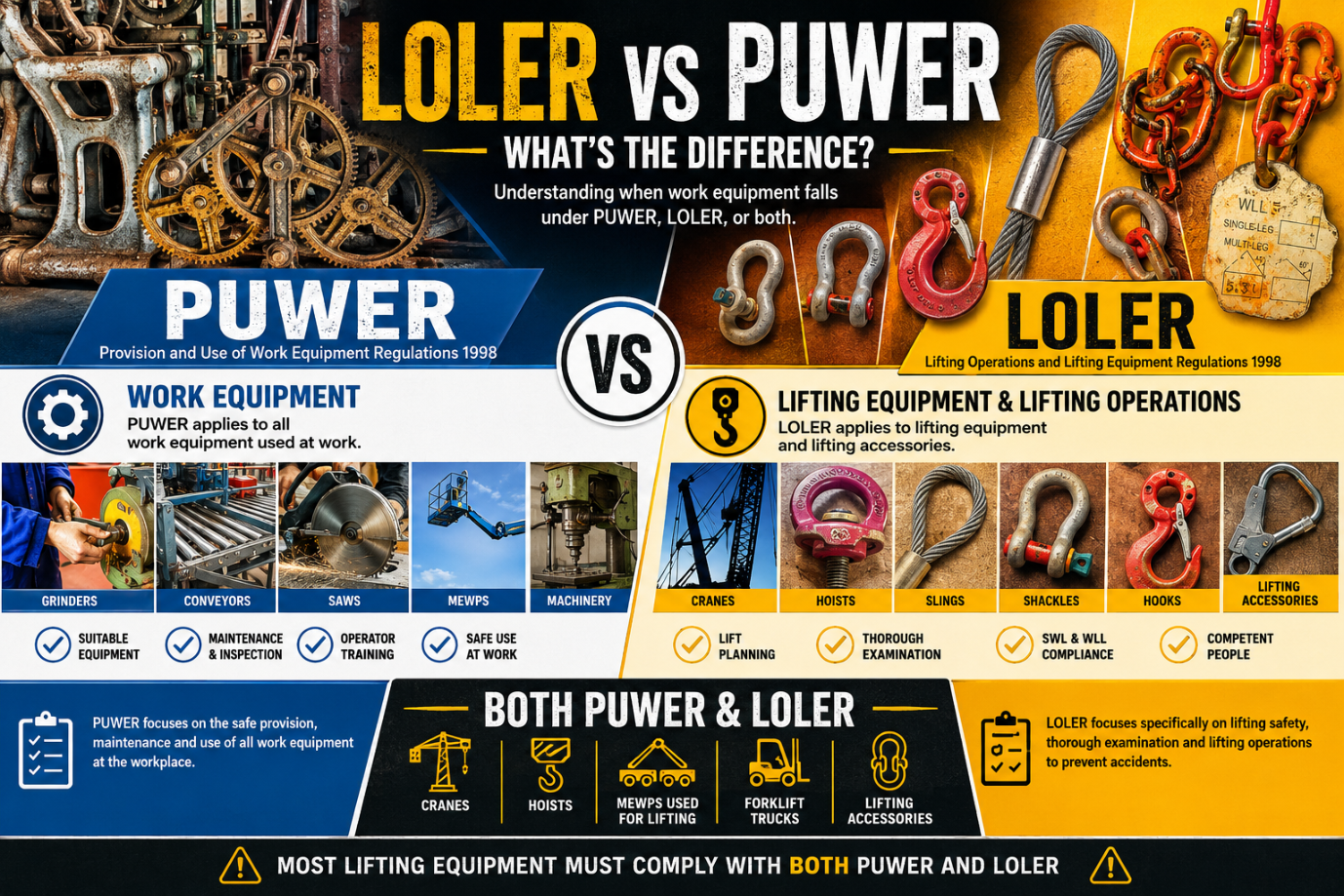
What is the difference between LOLER and PUWER?
Can operators carry out thorough examinations?
Daily checks can be completed by operators, but thorough examinations must be completed by a competent person.
Does lifting equipment need examining after repairs?
Yes. Additional examinations may be required following significant repairs, modifications, or exceptional events.
How long should LOLER records be kept?
Examination reports should be retained in accordance with LOLER requirements and company procedures.
Final Thoughts
Regular thorough examination is a key part of safe lifting operations and legal compliance under LOLER.
By ensuring lifting equipment is examined at the correct intervals and by competent persons, employers can reduce risk, improve safety standards, and help prevent serious incidents.
If you would like to find out more about lifting equipment inspection training or the NPORS N019 – Report of Thorough Examination course, contact Kentra Training today.
Train with confidence. Inspect with competence. Stay compliant with LOLER.
We look forward to welcoming you to our next course!
Thank you for reading our blog about Lifting Equipment, NPORS N019 – Report of Thorough Examination Training, for more details you can also check out our other blogs:
N019 Official NPORS Report Of Thorough Examination Training
Report of Thorough Examination – our A 2 Z of Safety Training
N019 Report of Thorough Examination Course Details
NPORS Report of Thorough Examination
LOLER Compliance Made Simple: Mastering NPORS N019 – Report of Thorough Examination Training
Our awarding body is National Plant Operators Registration Scheme – NPORS.com



Leave A Comment