



Why the HSE L117 Forklift Guidance Matters
And What It Means for Your Lift Truck Training
At Kentra Training, we deliver high-quality workplace training that not only builds competence and confidence — it also helps employers meet their legal duties under UK health and safety law. One of the key industry standards that underpins forklift training is the Health and Safety Executive’s (HSE) “Rider-operated lift trucks: Operator training and safe use, Approved Code of Practice and guidance”, commonly referred to as L117.
What is the HSE L117 Forklift Guidance?
L117 is the HSE’s Approved Code of Practice (ACOP) for the safe operation, training, and use of rider-operated lift trucks — including counterbalance trucks, reach trucks, pivot steerers and similar industrial vehicles.
As an ACOP, L117 goes beyond general advice: it sets out the minimum standards expected by law for training and safe use. Where the Code of Practice uses the word “should”, following it gives you a rebuttable presumption of compliance with the law.
Who Needs to Know About It?
L117 is aimed at:
- Employers and managers who control forklift operations
- Those responsible for safety on site
- Supervisors and personnel involved in training and assessment
It applies wherever rider-operated lift trucks are used — whether in warehouses, manufacturing floors, distribution hubs, construction sites, or other workplaces.

What L117 Covers
The guidance includes practical detail on:
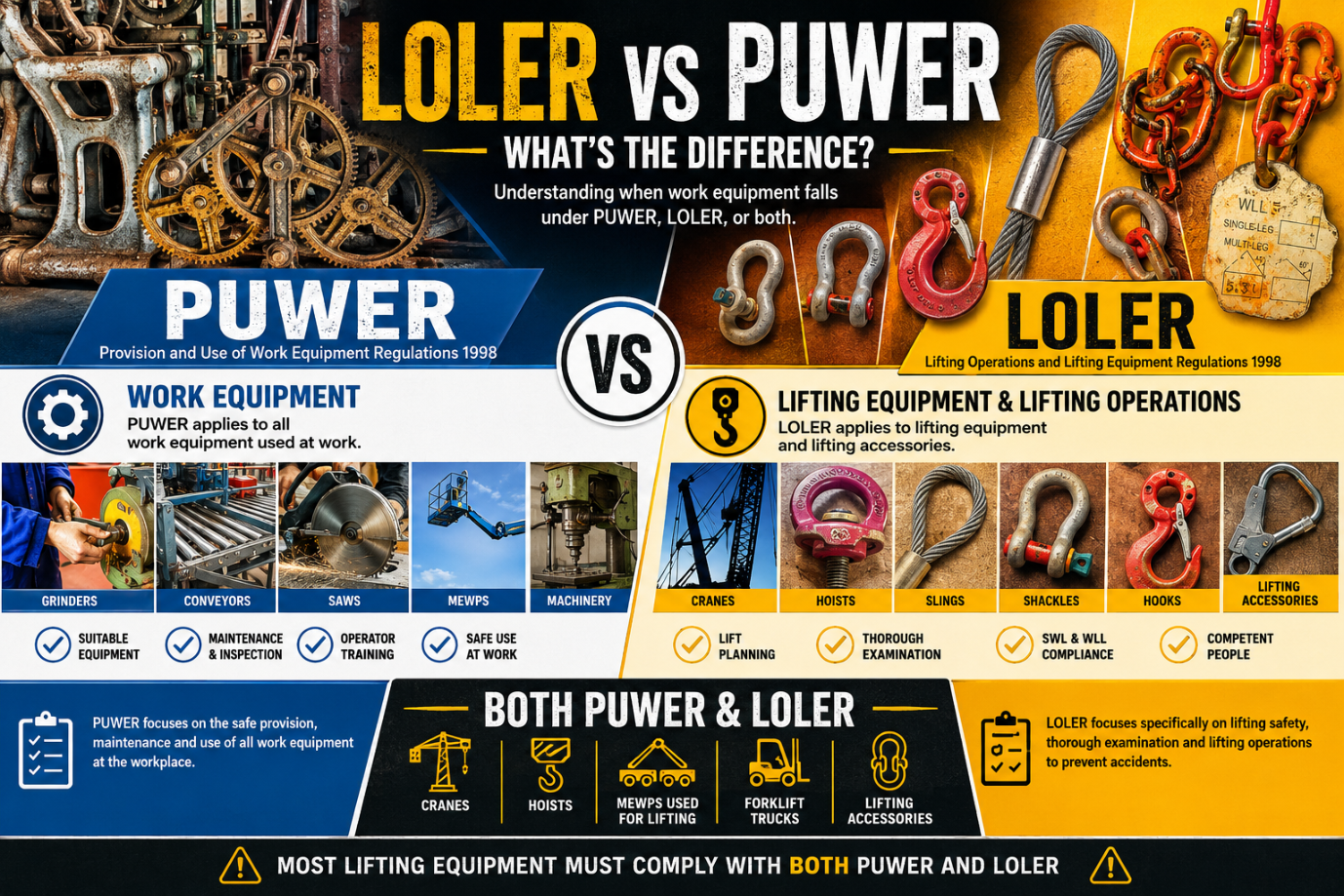
✔ Legal duties and safety responsibilities — L117 ties into key UK legislation such as the Health and Safety at Work Act, PUWER and LOLER, emphasising that employers must ensure safe use and training.
✔ Operator training requirements — It sets out what good-quality training must include, how it should be structured and what competency looks like.
✔ Protecting people and property — Including guidance on site risks, pedestrian hazards and operating safely within workplace environments.
✔ Maintenance and thorough examination — As part of safe use, equipment must be maintained and inspected appropriately.
The Three Stages of Training
One of the core messages of L117 — and the legal baseline for compliance — is that operator training shouldn’t be one-dimensional. It must include three essential stages before someone is authorised to operate a lift truck:
- Basic Training — Core skills and knowledge necessary for safe operation
- Specific Job Training — How the truck will be used in a particular workplace
- Familiarisation Training — Supervised on-site practice applying skills in real working conditions
These stages ensure operators are not just competent in theory, but capable in the context of your workplace and equipment.
Refresher and Monitoring
While there’s no fixed legal timetable for refresher training, L117 — supported by HSE training advice — highlights the importance of ongoing monitoring and reassessment so operators stay safe and competent throughout their working life.
The HSE recommend refresher training every 3 – 5 years, depending on the frequency of the candidates use of the knowledge. For example if the candidate is using the machinery or equipment on a daily / weekly basis they would be able to have a longer time, 5 years before a refresher is required, whereas less frequent users are 3 years.
But there are important exceptions to this. For example, after a period of absence. This would apply now, at a time where operations are beginning to pick up and where operators may not have worked for some months. Though it would be very unlikely that an operator will have forgotten absolutely everything they knew before lockdown, carrying out refresher training for operators will enable you to go over any areas of concern, revisit best practice, and feel confident in the safety, efficiency and compliance of your operation going forward.
Another exception to the ‘three to five year’ rule would be for occasional users. This may be relevant at the moment where those who have completed training, but do not routinely use equipment, need to do so to fill gaps in resource. These employees should receive refresher training before they operate the equipment.
One final exception which the HSE highlight as extremely important is refresher training is recommended immediately if there is an accident or incident.
This includes:
- Watchfulness for unsafe habits
- Reassessment after accidents or long breaks
- Refresher training where skills begin to slip

Supervision and Site Control
Good training alone isn’t enough: employers must also ensure proper supervision and control. Managers and supervisors should understand safe working practices so they can spot unsafe behaviours and intervene effectively.
Why This Matters
Forklifts are powerful and versatile machines — but they’re also involved in a disproportionate number of workplace accidents if poorly controlled. Ensuring training aligns with the HSE’s L117 ACOP helps employers not only comply with the law, but also support a safer workplace culture and protect their people and assets.
In Summary
The HSE L117 Forklift guidance is more than a document — it’s a cornerstone of safe lift-truck practice in the UK. Training that aligns with its standards helps you to:
- Understand and meet legal duties
- Train operators effectively and consistently
- Maintain safety in the workplace
- Demonstrate compliance in the event of inspection
At Kentra Training, we design and deliver forklift training that follows the spirit and structure of HSE L117 Forklift and best practice — supporting both compliance and confidence on site.

👉 Get in touch with us today to discuss how we can support your organisation with compliant, effective forklift operator training.
📞 Call us on 01606 832 556 or visit www.kentratraining.co.uk to arrange your course.
Kentra Training – Our Mission : Making safety second nature.
Thank you for reading our blog about HSE L117 Forklift, for more details on the individual courses, just follow the links below.





Leave A Comment